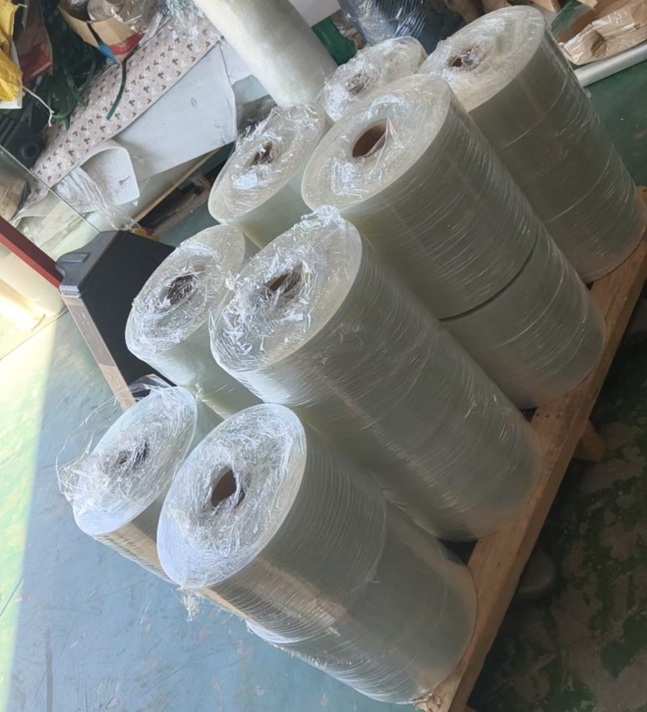
PET release film thickness: how the liner gauge changes cutting, coating and peeling
PET release film thickness looks like a small line on a quote, but for a liner it changes quite a lot: how the die cutter behaves, how the coater runs, how the peel feels in the hand and how heavy the roll is. If you are not sure where to start, do not pick a number from a chart. Work backwards from the job, the way you would talk it through with a friend who has run a few of these lines.
PET release film thickness: what changes when the liner gets thicker or thinner
- Stiffness: a thicker liner is generally stiffer and stays flatter on the table. A thinner liner is more flexible and follows curves more easily.
- Die cutting: the liner is often the layer the blade must not cut through, or must cut only part way. Thickness changes how forgiving the cut is, so test it on your own tool.
- Peel feel in the hand: a thin liner can feel floppy and hard to grip. A thicker one is easier to grab, but may feel stiff on small parts.
- Coating and laminating: thin liners can wrinkle or stretch under tension. Thicker liners run more steadily but weigh more per roll.
- Roll weight and size: for the same width and length, a thicker liner means a heavier, larger roll.
- Cost per area: a thicker liner uses more material, so a quote moves with it. See what affects a BOPET film price for how to compare fairly without any figures.
A simple way to narrow it down
- Start from what you use now. If a liner already works, take its thickness and try the next step either side.
- Ask for two or three thicknesses. One thinner, one thicker and your current one make the trend obvious in your own process.
- Test the real steps. Run each one through your coater, laminator, die cutter and the hand that will peel it. Our page on how to test a PET release film sample shows a simple way.
- Write down what you saw. Which one ran flat, which one wrinkled, which one cut cleanly and which one was easiest to peel.
Things that depend on the job
- Labels: the liner has to carry the label through printing and dispensing. See PET release film for labels.
- Tapes and die-cut parts: the liner has to stay flat while shapes are cut and handled. See PET release film for tapes.
- Heat steps: if the liner goes through drying or heat, say so, since thickness and film behavior both matter there.
Common mistakes with liner thickness
- Choosing the thinnest liner to save material, then fighting wrinkles on the line.
- Choosing a thick liner “to be safe” and paying for stiffness the job does not need.
- Mixing units, such as writing mil but meaning microns. Our guide to BOPET film specifications: microns, mil and how to write them shows a clean way to write it.
- Forgetting that thickness has a tolerance, so two rolls with the same nominal value can differ a little.
What to include in an enquiry
- What the liner does: labels, tapes, die-cut parts or another use.
- The thickness you use now, with the unit written out, and the range you want to try.
- Release type, release side and finish.
- Adhesive type and process steps such as coating, die cutting or heat.
- Roll width, length and core size. Our rolls use a 76 mm core.
- Quantity, and a request for datasheets and samples before the main order.
Talk to Us
Jinlu Film supplies PET film in various grades, and also supplies products with similar specifications, including domestic alternatives. We slit and convert PET film in our own facility, with custom roll widths, lengths and 76 mm cores, and we provide datasheets and samples. If you are looking for a PET film manufacturer to help you compare liner thicknesses, send us the job, your current thickness, the size and the quantity.
More PET Film Guides
PET Release Film Adhesive Residue: How to Describe the Problem: words and photos for a residue problem.
Single Side vs Double Side Release Film: Which One to Pick: one release face or two, and how to choose.
PET Release Film Storage: Keeping the Release Surface Good: what the release surface dislikes and what to retest.
PET Release Film for Tapes: Where the Liner Fits In: what a tape liner does and what to ask.
PET Release Film for Labels: What the Liner Has to Do: what a label liner does and what to ask.
General guidance for reference only. Trademarks belong to their respective owners.