BOPET film price: six things that change a quote and how to ask for one
BOPET film price is not a single figure you can look up. Two quotes for “BOPET film” can differ because the grade, thickness, surface and roll format are not the same, even when the names look alike. This guide does not give prices. It explains which details move a quote, so you can write an enquiry that makes quotes comparable.
BOPET film price: why quotes differ
A quote is the price of a specific film in a specific form, under specific terms. If one enquiry says only “BOPET film, clear” and another gives a full specification, the answers will not match. The more clearly you describe what you need, the easier it is to compare offers on equal terms and to see what is really included.
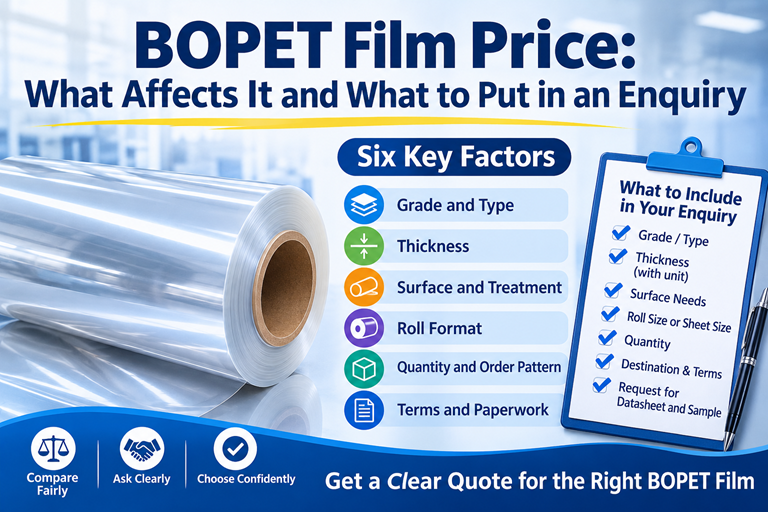
Six things that change a quote
- Grade and type: clear, white, matte, treated, coated, colored or release film are different products with different costs.
- Thickness: thickness changes the weight of film per roll and per square meter, which affects how a quote is calculated. Write the unit clearly. Our guide to PET film thickness and where each is used shows how thickness ranges relate to uses.
- Surface and treatment: a treated or coated side is a different specification from a plain one, so say which side matters.
- Roll format: custom widths, lengths and cores need slitting or converting, and a standard master roll does not. Our rolls use a 76 mm core.
- Quantity and order pattern: one order and regular repeat orders are quoted differently, so say which one you expect.
- Terms and paperwork: packing, delivery terms, destination and the documents you need can all change the final figure.
Price per kilogram, per square meter or per roll
Quotes can be written in different units, and they are not directly comparable until you convert them. Ask each supplier to state the unit, the thickness the price applies to and what the roll size is. Density, also called specific gravity, links weight and area, and our guide to BOPET film properties and the datasheet explains where to find it.
How to compare two quotes fairly
- Check that both quotes name the same grade and the same thickness.
- Check whether the quote is for a master roll or for slit rolls of your size.
- Check what is included: packing, pallets, documents and delivery terms.
- Ask for a datasheet and a sample before deciding on price alone.
A lower figure on paper can hide a different grade or a different roll format, so the cheapest line is not always the lowest real cost. For other points to check when choosing a source, see PET film suppliers.
What to put in a price enquiry
- Grade or type, and the model if you already use one.
- Thickness, with the unit written out.
- Surface needs: plain or treated, and which side is the working side.
- Roll width, length and core size, or sheet size.
- Quantity for the first order and the expected yearly demand, if you know it.
- Destination, delivery terms and the documents you need.
- A request for datasheets and samples before the main order.
Talk to Us
Jinlu Film supplies PET film in various grades, and also supplies products with similar specifications, including domestic alternatives. We slit and convert PET film in our own facility, with custom roll widths, lengths and 76 mm cores, and we provide datasheets and samples. If you are looking for a PET film manufacturer to quote a specific BOPET film, send us the grade, thickness, size, quantity and destination.
More PET Film Guides
Printable Polyester Film: Match the Surface to Your Print Method: how print methods change the surface you need.
Recycled BOPET Film: Which Documents to Ask a Supplier For: how to check a claim on paper.
SKC Skyrol PET Film: How to Find the Right Model: how to read a model code and where to find our model pages.
7 Things to Check When Choosing a PET Release Film Supplier: what to settle before sending an enquiry.
Mylar Sheets Uses: Six Common Jobs and How to Order: what to specify for each common use.
General guidance for reference only. Trademarks belong to their respective owners.