Polyester film for membrane switches: what to specify before you order
Polyester film for membrane switches is PET film used in the thin, layered panels behind many buttons, control panels and keypads. PET suits this job because it is flexible, strong for its thickness and holds its size, but a membrane switch uses several film layers, and each layer asks for something different. This guide explains in general terms where polyester film appears in a membrane switch and what to specify when you request a quote. It is general industry information, not a recommendation for any specific grade.
Where polyester film is used in a membrane switch
A membrane switch is generally built from a stack of thin layers: a graphic overlay on top, one or more circuit layers with printed conductive traces, a spacer layer between them, and an adhesive layer to mount the panel. Polyester film is commonly used for the circuit layers and the spacer, and sometimes for the overlay. Some overlays use other plastics instead, so the right choice depends on the design and on what your customer expects the panel to endure.
What each layer asks from the film
- Circuit layer: the film needs a surface that conductive ink can wet and hold, and it must keep its size when the ink is dried or cured. Our guide to PET film for flexible circuits lists the datasheet items to read first.
- Graphic overlay: the surface finish matters here, whether glossy, matte or textured. A matte look comes from haze, which our note on hazy polyester film explains. Printing and lamination also depend on the surface, as covered in our overview of PET film printing.
- Spacer layer: a stable, even thickness helps keep the gap between the layers consistent.
Properties that usually matter
- Dimensional stability: printed circuits must line up between layers, so shrinkage during drying or curing needs checking. See heat stabilized polyester film for how shrinkage is described.
- Surface treatment: treated or primed surfaces help inks and adhesives hold. Tell the supplier which process follows.
- Flexing: a switch is pressed many times, so ask whether the supplier has data relevant to repeated flexing, and under what conditions it was measured. Do not assume it from the product name.
- Thickness and tolerance: thickness affects the feel of the key press as well as handling, so ask for the tolerance and not just the nominal value.
- Clarity: some designs include a window for a display or indicator, so state whether any part of the film must be see-through.
What to specify when you request a quote
- Layer use: overlay, circuit layer or spacer, since each needs a different surface and thickness.
- Thickness and tolerance: the nominal thickness and the allowed variation.
- Surface: glossy, matte or textured, treated or untreated, and which side is printed.
- Process: ink type, drying or curing temperature and time, and any lamination or die cutting that follows.
- Appearance: clear, hazy or colored.
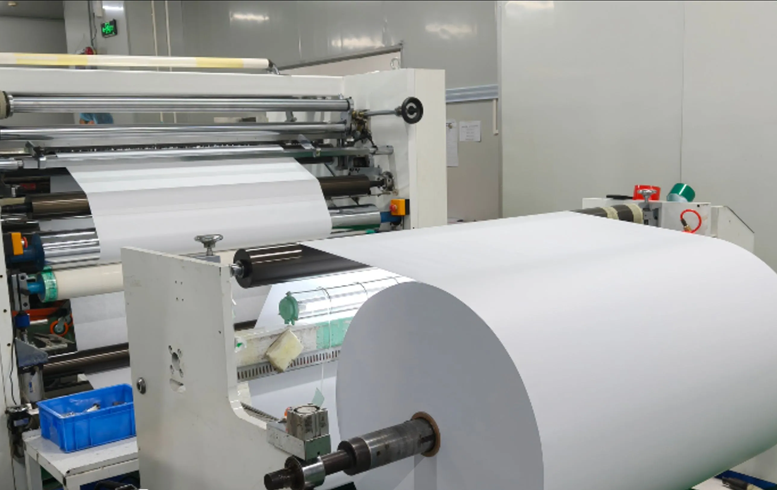
- Format: roll or sheet, width, length and core size. Our roll cores are 76 mm inner diameter.
Test a sample on your own line
Whether a film works depends on the film, the ink, the adhesive and the process together. Print a sample with your own ink, run it through your own curing and lamination steps, then check adhesion, register and feel before you place a larger order.
Talk to Us
Jinlu Film supplies PET film in various grades, and also supplies products with similar specifications, including domestic alternatives. We provide datasheets and samples, and we match the film to your layer, surface and process needs. Send us your thickness, surface and curing conditions and we will help you narrow the options. Learn more about us as a PET film manufacturer.
More PET Film Guides
PET Film for Printed Electronics: why the surface comes first.
Decoration PET Film: finishes and what to specify.
Photovoltaic PET Film: what to ask a supplier first.
Mylar Film: is it a brand or just polyester?
Clear PET Film: what clear really means on a datasheet.
General guidance for reference only. Trademarks belong to their respective owners.