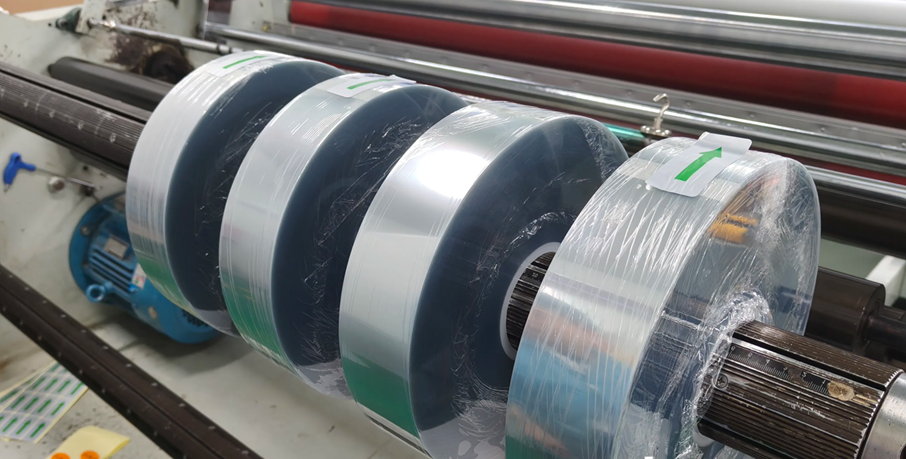
Clear PET film: what “clear” really means and how to compare it
Clear PET film is the default choice when you want to see through a material, but “clear” is not a measured property. Two films that are both sold as clear can look and perform differently. This guide explains the values behind the word, why clear films still differ, and what to check before you order. It is general industry information, not a recommendation for any specific grade.
What does clear PET film mean?
Generally, clear PET film is colorless film that lets most light pass through. Buyers also search for clear polyester film or transparent PET film, and these terms usually mean the same thing. On a datasheet, clarity is described by numbers instead: light transmission (how much light gets through), haze (how much of it is scattered) and sometimes a clarity or see-through value. A film with high transmission and low haze looks clearest.
Why two clear films can look different
- Surface additives: many clear films contain fine particles so rolls wind and unwind smoothly. More particles can mean slightly more haze.
- Surface treatment or coating: a coating added for printing or adhesion can slightly change how the film looks.
- Thickness: thicker film generally shows a little more haze and may look slightly tinted at the edges of a roll or stack.
- Handling: scratches, dust and fingerprints can make good film look worse than its datasheet.
Clear is not always the right goal
Some projects work better with a deliberate frosted or matte look, and our guide to hazy polyester film explains when. If you are unsure, decide first whether the film must be seen through, or only needs to let light pass.
Thickness and clarity
Film thickness affects stiffness, handling and appearance together, so check it alongside the optical values. Our overview of PET film thickness and where each is used shows how the range is generally used. Ask for optical values at the thickness you plan to buy, not at a different one.
Printing, coating and treated surfaces
If the clear film will be printed, coated or laminated, the surface matters as much as the optical values. A treated surface can help inks and adhesives hold; see our note on corona treated PET film for one common treatment. Tell your supplier which process follows so the right surface can be matched.
What to check on a datasheet before ordering
- Light transmission and haze: measured values, and the thickness they apply to.
- Thickness and tolerance: the nominal thickness and the allowed variation.
- Surface: treated or untreated, one side or both.
- Mechanical and thermal data: tensile strength, shrinkage and working temperature, if the film will be converted or heated.
- Roll format: width, length and core size. Our roll cores are 76 mm inner diameter.
Compare samples side by side
Clarity is easier to judge by eye than from a table. Put samples next to each other under the lighting you will actually use, and check them again after your own process step.
Talk to Us
Jinlu Film supplies PET film in various grades, and also supplies products with similar specifications, including domestic alternatives. We provide datasheets and samples. If you are comparing clear films, send us your thickness, surface and process needs and our team will help you narrow the options. Learn more about us as a PET film manufacturer.
More PET Film Guides
PET Film Manufacturing: the process in six steps.
Polyester Film Distribution: who sells and what to ask.
PET Protective Film: types, uses and what to specify.
Heat Stabilized Polyester Film: five checks before ordering.
Hazy Polyester Film: why some buyers want haze on purpose.
General guidance for reference only. Trademarks belong to their respective owners.