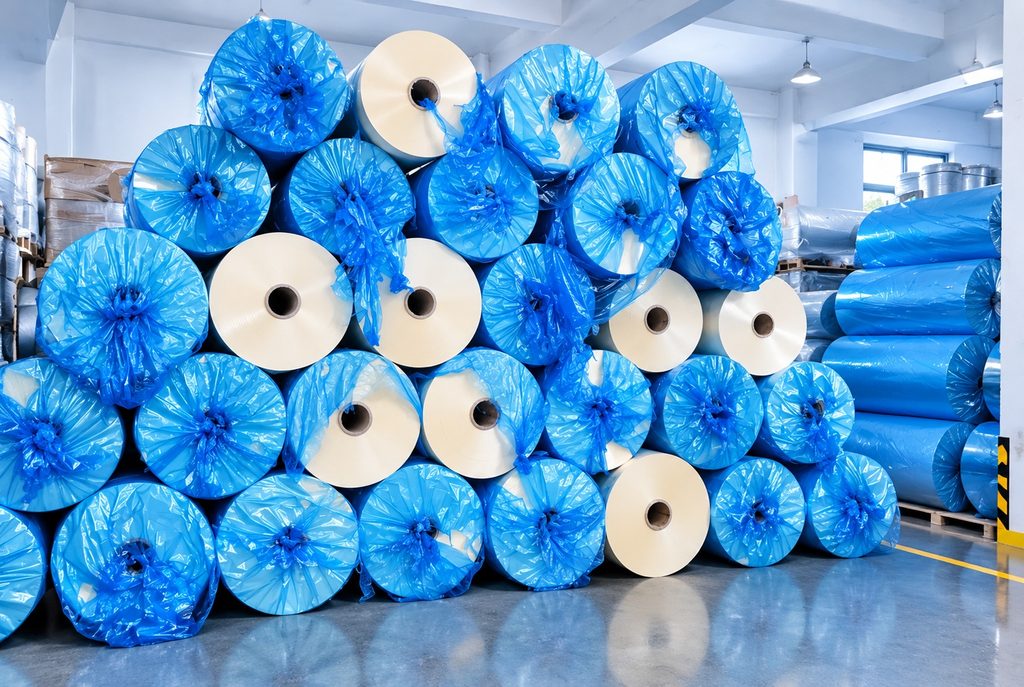
PET double sided release film is a polyester film coated with silicone on both surfaces to provide controlled release properties. In tempered glass manufacturing and glass processing, this type of film may be used as an interleaving or protective material to help reduce direct contact between glass surfaces during handling, stacking, storage, and transportation.
For glass manufacturers, selecting the right release film involves more than confirming that both sides are silicone-coated. Release force, film thickness, surface cleanliness, temperature resistance, and compatibility with the glass surface all need to be considered. The material should be evaluated under the actual production and storage conditions.
Why Is Double Sided PET Release Film Used in Glass Processing?
Glass sheets can be scratched, marked, or contaminated when they come into direct contact during handling and transportation. An interleaving material placed between glass surfaces can help reduce direct contact and provide a protective separation layer.
Double sided PET release film has a silicone release surface on both sides. This configuration may be useful when either side of the film comes into contact with an adhesive, protective layer, or another surface that requires release characteristics.
However, the exact function depends on the glass manufacturer’s process. Some applications require a release surface on both sides, while others may only need a non-adhesive protective film. Buyers should confirm the actual contact conditions before selecting the coating configuration.
How Does Double Sided Silicone Coating Work?
In double sided PET release film, silicone release coatings are applied to both surfaces of the PET base film. These coatings create controlled non-stick characteristics and allow materials to separate more easily under specified conditions.
The two sides do not necessarily have identical release performance. Depending on the coating system and application, each side may be designed with a different release force. This is why buyers should specify the release requirements for both surfaces rather than simply requesting a double sided coating.
For a general explanation of transparent silicone-coated polyester materials, see our article about transparent PET release film, which explains the basic structure and common uses of PET release liners.
Important Specifications for Tempered Glass Applications
When selecting double sided PET release film for glass processing, buyers should confirm the following specifications:
- Base film thickness: Specify the required PET thickness and acceptable tolerance.
- Film width: Confirm the required width and width tolerance according to the glass dimensions and handling process.
- Roll length: State the required length per roll, core diameter, and maximum roll diameter.
- Silicone coating: Confirm that both surfaces require release coating.
- Release force on each side: Specify the release requirements for Side A and Side B separately where necessary.
- Temperature resistance: Confirm the maximum temperature the film will experience during handling, storage, or processing.
- Surface cleanliness: Check whether the application requires particular limits for dust, contamination, or coating defects.
- Film appearance: Confirm whether transparent, matte, or another surface appearance is required.
- Processing method: Explain how the film will be inserted, removed, stacked, or handled during production.
Film thickness should be selected according to the required handling and protection performance. A thicker film is not automatically the best choice. For more information, refer to our PET film thickness selection guide.
Why Is Temperature Resistance Important?
Temperature conditions should be clearly identified when release film is used in glass manufacturing. The film may be exposed to heat during handling or placed near glass that has retained heat from an earlier production process.
If the film is used outside its recommended temperature range, its dimensional stability, coating characteristics, or release performance may change. Depending on the material and contact conditions, this could lead to difficult removal, unwanted marks, or residue concerns.
Buyers should distinguish between the temperature used during glass tempering and the temperature that the release film actually experiences. The film should not be assumed to enter the tempering furnace unless it has been specifically designed and qualified for that process.
Before bulk purchasing, confirm the maximum operating temperature with the supplier and conduct a practical test under the actual glass handling conditions.
Double Sided vs. Single Sided PET Release Film
The choice between single sided and double sided release film depends on which surfaces require release properties.
| Item | Single Sided PET Release Film | Double Sided PET Release Film |
|---|---|---|
| Silicone coating | One surface | Both surfaces |
| Release properties | One release surface | Two release surfaces |
| Specification | Release force on the coated side | Release force for each side |
| Typical selection factor | One surface requires controlled release | Both surfaces require controlled release |
For applications that only need one release surface, single sided PET release film may be a more suitable specification. The coating configuration should always match the actual process rather than being selected simply because one option sounds more advanced.
Transparent and Matte PET Release Film Options
Surface appearance is another factor buyers may need to specify. Transparent PET release film allows visual inspection through the material, while matte PET release film has a lower-gloss surface appearance.
Transparency or matte appearance is separate from the number of silicone-coated sides. A matte film can be single-sided or double-sided, depending on its coating specification. Similarly, transparent film can also be coated on one or both surfaces.
For applications where low-gloss appearance is preferred, see our guide to matte PET release film.
How Should Buyers Test PET Release Film?
Before using a new release film in regular production, buyers should test it with the actual glass surfaces and handling conditions. A specification sheet alone cannot fully predict performance in every production environment.
Useful evaluation points include:
- Check whether the film separates smoothly from the contact surface.
- Observe whether either side leaves visible residue or marks.
- Evaluate the film after exposure to the actual storage and operating temperatures.
- Check whether the film remains flat and stable during handling.
- Confirm whether the release performance changes after storage.
- Inspect the glass surface after removing the film.
Testing should use representative samples and the actual process conditions. If the glass surface has a special coating or treatment, compatibility should be checked carefully before large-scale use.
What Information Should Be Included in a Quotation Request?
To help a supplier evaluate the correct material, buyers should provide the following information:
- Required PET film thickness
- Required roll width and length
- Order quantity
- Single sided or double sided silicone coating
- Required release force for each side
- Maximum temperature during use
- Transparent or matte surface requirement
- Glass type and intended application
- Any special requirements for cleanliness, packaging, or handling
Providing these details helps avoid misunderstandings about the coating configuration and actual performance requirements. Buyers can also review our PET release film product category for related material options.
Frequently Asked Questions
What is double sided PET release film?
It is a PET polyester film with silicone release coating on both surfaces. Each side provides release characteristics, and the required release force can be specified according to the application.
Why is double sided release film used in glass factories?
It may be used as an interleaving or protective material where both surfaces require controlled release properties. The exact application depends on the glass handling and packaging process.
Must both sides have the same release force?
No. The required release force may differ between the two sides. Buyers should state whether the two surfaces need identical or different release characteristics.
Can PET release film withstand the heat from tempered glass?
That depends on the PET base film, silicone coating, and actual exposure temperature. Buyers should confirm the maximum operating temperature and test the material under their own process conditions.
Can transparent PET release film be double-sided?
Yes. Transparent PET release film can be coated on one side or both sides. Transparency describes the film’s appearance, while single-sided or double-sided describes the silicone coating configuration.
What is the difference between matte and transparent PET release film?
The main difference is surface appearance. Transparent film allows better visual inspection through the material, while matte film has a lower-gloss finish. Both types can have different coating configurations.
What information is needed to request a quotation?
Provide the thickness, width, roll length, quantity, coating configuration, release force requirements, temperature conditions, and intended glass application.
About Jinlu
Dongguan Jinlu Electronics Co., Ltd. supplies PET film and related flexible film materials for industrial applications. We work with material producers and arrange suitable specifications, slitting, rewinding, and sheet cutting according to project requirements.
For double sided PET release film inquiries, please provide the required thickness, width, quantity, release force on both sides, temperature conditions, and intended application. This information helps us evaluate the appropriate material specification.
Contact Jinlu for PET release film inquiries
Disclaimer
The information in this article is provided for general reference only. Actual release performance, temperature resistance, and surface compatibility may vary depending on the PET grade, silicone coating system, glass surface, and operating conditions. Buyers should confirm the original manufacturer’s technical specifications and conduct application testing before production.