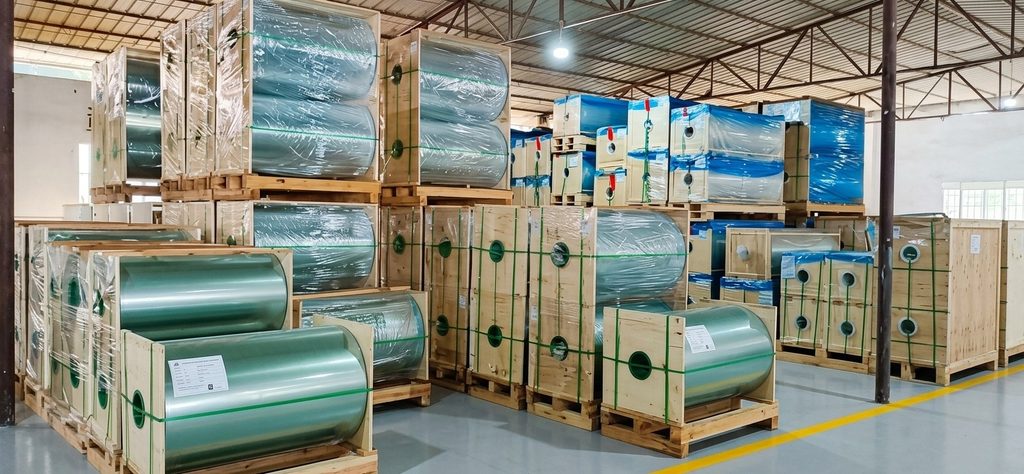
PET film thickness is one of the most important factors when selecting polyester film for industrial applications. However, thicker PET film is not automatically stronger, better, or more suitable for every project. The correct thickness depends on the intended application, mechanical requirements, flexibility, processing conditions, and total material cost.
PET film is available in a wide range of thicknesses, from very thin films measured in microns to thicker polyester films and sheets measured in hundreds of microns. Choosing the right specification helps buyers avoid unnecessary material costs while ensuring the film performs as required.
Jinlu supplies different specifications of PET film, including thin and thick polyester film options. The suitable grade should always be selected according to the customer’s actual application.
Why Thicker PET Film Isn’t Always Better
A common assumption among first-time buyers is that increasing PET film thickness will automatically improve product quality. This is not always correct.
Thickness is only one part of the material specification. The actual performance of PET film also depends on its polymer grade, manufacturing process, orientation, surface treatment, and other technical characteristics.
A thicker film may provide greater stiffness or handling strength in a particular application, but it can also be less flexible, heavier, and more expensive. In applications that require thin, flexible material, choosing an unnecessarily thick film may create processing problems rather than improve performance.
The goal is not to purchase the thickest available film. It is to select a thickness that meets the technical requirements without adding unnecessary cost.
Common PET Film Thickness Ranges
PET film is supplied in many thickness specifications. The following table shows examples of thicknesses used in different industrial and converting applications. These are general reference examples, not universal application limits.
| Thickness | Equivalent in Microns | Typical Considerations |
|---|---|---|
| 0.0045 mm | 4.5 μm | Ultra-thin film applications requiring precise handling |
| 0.006 mm | 6 μm | Very thin film applications |
| 0.012 mm | 12 μm | Thin film applications and specialized converting |
| 0.019 mm | 19 μm | Thin polyester film applications |
| 0.025 mm | 25 μm | Packaging and industrial converting applications |
| 0.038 mm | 38 μm | General industrial and converting applications |
| 0.050 mm | 50 μm | Applications requiring additional film thickness |
| 0.075 mm | 75 μm | Industrial, insulation, and converting applications |
| 0.100 mm | 100 μm | Applications requiring a thicker polyester film |
| 0.125 mm | 125 μm | Thicker film and sheet-related applications |
| 0.188 mm | 188 μm | Applications requiring greater material thickness |
| 0.250 mm | 250 μm | Thick PET film and sheet applications |
| 0.350 mm | 350 μm | Thicker sheet and industrial applications |
For buyers who need a very thin specification, our 6 μm PET film product page provides a specific thickness reference. Actual availability and technical properties should be confirmed for each order.
How Thickness Affects PET Film Performance
1. Stiffness and Handling
Increasing film thickness generally increases bending stiffness when comparing otherwise similar materials under the same conditions. A thicker film may be easier to handle in some converting operations, while a thinner film may be more flexible and easier to conform to a surface.
However, thickness alone does not determine tensile strength or overall material quality. Buyers should check the relevant technical data for the specific film grade.
2. Flexibility
Thin PET film is often selected when flexibility, lightweight construction, or reduced material thickness is important. Thicker PET film may be more rigid and may not suit applications that require tight bending or conformability.
The required flexibility should be evaluated in the actual processing conditions rather than assumed from thickness alone.
3. Weight and Material Consumption
For the same film width and length, increasing thickness generally increases the material weight. This affects roll weight, transportation costs, storage, and the amount of raw material consumed per square meter.
For large-volume purchases, even a small difference in thickness can influence the total material cost. Buyers should compare price and weight using the same measurement basis.
4. Processing and Converting
Different thicknesses may behave differently during slitting, rewinding, lamination, printing, die cutting, and other converting operations. The correct selection depends on equipment capability, tension settings, dimensional stability, and the requirements of the finished product.
How to Choose the Right PET Film Thickness
Before selecting a thickness, buyers should consider the following questions:
- What is the application? Identify whether the film is used for packaging, insulation, lamination, printing, adhesive processing, or another purpose.
- How much flexibility is required? Determine whether the film needs to bend, conform, or remain relatively rigid.
- What mechanical properties are necessary? Check tensile strength, elongation, dimensional stability, and other relevant technical requirements.
- What processing equipment will be used? Confirm that the selected thickness can run through the intended slitting, rewinding, printing, or converting process.
- What are the dimensional requirements? Specify thickness tolerance, width, roll length, and any finished sheet dimensions.
- What is the cost target? Compare the material cost against the performance requirements rather than choosing thickness based on price alone.
For example, a buyer who needs a thin polyester film for a specialized process may not benefit from choosing a much thicker grade. Conversely, an application requiring greater stiffness may need a thicker material. The correct choice must be based on the actual engineering and processing requirements.
Thin PET Film vs. Thick PET Film
| Comparison | Thin PET Film | Thick PET Film |
|---|---|---|
| Flexibility | Generally more flexible | Generally less flexible |
| Bending stiffness | Generally lower | Generally higher |
| Weight per square meter | Generally lower | Generally higher |
| Material consumption | Lower for the same area | Higher for the same area |
| Handling | May require more careful tension and handling control | May be easier to handle in some applications |
| Selection priority | Thinness, flexibility, and lightweight construction | Stiffness, thickness, and application-specific requirements |
These comparisons are general tendencies for otherwise similar PET film grades. Actual performance also depends on material properties, manufacturing conditions, and product design.
PET Film Thickness for Different Applications
Packaging and Lamination
Packaging applications may use different PET film thicknesses depending on the structure, printing process, lamination requirements, and final packaging design. The film must be compatible with the other layers and the converting process.
Electrical and Motor Insulation
Electrical insulation applications require more than a thickness match. Buyers may need to consider dielectric properties, thermal requirements, mechanical performance, and applicable standards. Our PET insulation film product information provides a starting point for reviewing this material category.
Adhesive and Release Applications
PET release film is used as a release liner or process material in adhesive-related applications. In addition to base film thickness, buyers must specify silicone coating configuration and release force. You can review our PET release film range for related product information.
Thicker PET Sheet Applications
When the application requires a thicker and more rigid polyester material, buyers may need PET sheet rather than conventional thin film. Thickness, flatness, dimensions, and fabrication requirements should be confirmed before purchasing. See our PET sheet product information.
How to Specify PET Film When Requesting a Quotation
A clear inquiry should include enough information for the supplier to identify the correct material. We recommend preparing the following details:
- Product type or material grade
- Required thickness and tolerance
- Roll width or sheet dimensions
- Roll length and core diameter, if applicable
- Surface treatment or coating requirements
- Quantity and purchasing frequency
- Intended application and processing method
- Delivery destination and preferred trade terms
If you are comparing PET film with polyester film, remember that the names commonly refer to the same base polymer family, but the grade, orientation, surface treatment, and application specifications may differ. Read our article on PET film vs. polyester film for a clearer explanation.
Frequently Asked Questions
Does thicker PET film always have higher tensile strength?
No. Thickness and tensile strength are different properties. A thicker film may have greater load capacity in some situations, but tensile strength is also determined by the material grade and manufacturing process. Buyers should check the technical data for the specific product.
What is the thinnest PET film available?
Very thin PET film is available in specialized thickness ranges, including single-digit microns. Availability depends on the grade, supplier, and application requirements. Buyers should confirm the exact thickness and tolerance with the supplier.
How do I convert millimeters to microns?
One millimeter equals 1,000 microns. For example, 0.025 mm equals 25 μm, and 0.075 mm equals 75 μm.
Is 50 μm PET film better than 25 μm PET film?
Not necessarily. A 50 μm film is thicker and generally has greater bending stiffness than a comparable 25 μm film, but the thinner material may be more suitable when flexibility, weight, or material consumption is important. The application determines which one is appropriate.
Should I choose PET film or PET sheet?
The choice depends on thickness, rigidity, dimensions, and processing requirements. Flexible roll materials are generally described as PET film, while thicker and more rigid flat materials may be supplied as PET sheet. Confirm the required form and specifications with the supplier.
What information is most important when ordering PET film?
At minimum, specify the material type, thickness, width, quantity, and application. For converted rolls or sheets, also provide roll length, core size, cutting dimensions, and surface requirements.
About Jinlu
Dongguan Jinlu Electronics Co., Ltd. is an independent supplier and sourcing partner for PET film and related flexible film materials based in Dongguan, China.
We work with material producers and arrange suitable specifications, slitting, rewinding, and sheet cutting according to customer requirements. Our product range includes PET film, PET release film, PET sheet, PE film, PVC sheet and film, and OPP film.
If you are sourcing PET film, please provide the required thickness, width, quantity, application, and any special technical requirements so that the material can be reviewed.
Contact Jinlu for PET film inquiries
Disclaimer
This article is provided for general product selection and purchasing reference. The thickness ranges and application examples are illustrative only and do not constitute a technical specification or performance guarantee. Actual properties, tolerances, and suitability depend on the specific material grade and manufacturing process. Buyers should review the relevant technical data sheet and verify samples under their own application conditions before placing an order.