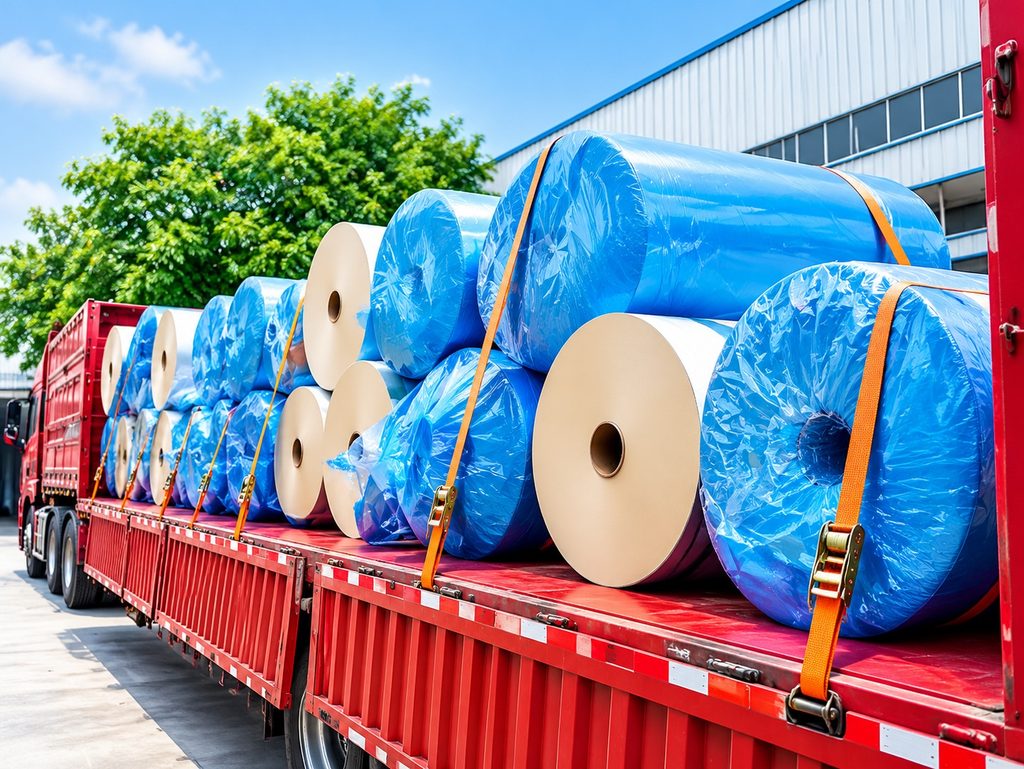
PET metallized film is made by depositing a very thin layer of aluminum onto a polyester (PET) base film through a vacuum metallizing process. This aluminum layer gives the film its reflective metallic appearance and can improve its barrier properties. However, when comparing supplier specifications, buyers should not assume that a higher aluminum thickness figure always means better overall performance.
The quality of metallized film depends on several factors, including optical density, coating uniformity, pinhole formation, adhesion, base film properties, and the conditions used in subsequent converting processes. Understanding these factors helps buyers evaluate material specifications more accurately.
Why Can the Aluminum Layer Number Be Misleading?
Aluminum deposited on PET film is extremely thin. In practice, suppliers may describe the coating using different measurements or general coating specifications. These figures are not always directly comparable unless the measurement method and test conditions are clearly stated.
A higher stated aluminum thickness does not automatically guarantee a better barrier result. The final performance also depends on whether the aluminum layer is continuous and uniform, whether pinholes are present, and whether the coating remains intact during handling, printing, and lamination.
For buyers sourcing metallized PET film, it is more useful to evaluate the complete technical specification than to focus on one coating number in isolation.
What Is Optical Density (OD)?
Optical density, commonly abbreviated as OD, is a measurement used to describe the light-blocking characteristics of metallized film. It is commonly used as a quality-control reference when evaluating the optical performance of the aluminum coating.
In general, a higher OD value means less light passes through the metallized film under the specified measurement conditions. This can provide a useful indication of the coating level, but OD should not be treated as a direct measurement of every barrier property.
For example, two films with similar OD values may still have different oxygen transmission rates (OTR), water vapor transmission rates (WVTR), or performance after flexing and lamination. These properties require their own tests.
Optical Density and Barrier Performance Are Not the Same Thing
Optical density is useful, but buyers should understand its limitations. It describes optical transmission rather than directly measuring oxygen or moisture transmission.
| Measurement or Factor | What It Indicates | Why Buyers Should Check It |
|---|---|---|
| Optical Density (OD) | Light-blocking characteristics of the metallized coating | Helps compare the optical coating level |
| OTR | Oxygen transmission rate | Relevant when oxygen barrier performance is required |
| WVTR | Water vapor transmission rate | Relevant when moisture barrier performance is required |
| Coating uniformity | Consistency of the aluminum layer across the film surface | Helps identify uneven coating and possible weak areas |
| Adhesion | Bonding between the aluminum layer and PET base film | Important during printing, lamination, and converting |
| Flexing resistance | Ability of the metallized structure to maintain performance after flexing | Relevant for flexible packaging and handling processes |
For a general introduction to the material itself, see our article What is PET metallized film?, which explains its manufacturing process, properties, and common applications.
Why Does Coating Uniformity Matter?
A metallized film may have a generally reflective appearance while still containing areas with different coating characteristics. Uneven deposition, pinholes, contamination, or defects in the base film can influence the final performance.
Coating uniformity matters because barrier performance depends on the integrity of the complete metallized surface. A localized weak area may affect the performance of the finished packaging structure even when the average optical density appears acceptable.
Buyers should therefore ask suppliers how OD is measured, whether the result is an average or a specified range, and whether coating consistency is checked across the film width.
Can a Thicker Aluminum Coating Cause Problems?
Increasing the aluminum deposition level may improve certain optical or barrier characteristics, but more coating is not automatically better for every application.
The required coating level should be balanced against the intended use, converting conditions, and cost. During flexing, winding, or lamination, the metallized layer may be exposed to mechanical stress. Microcracks or coating damage can reduce the effectiveness of the barrier structure.
This does not mean that a thicker coating will always crack more easily. The result depends on the metallization process, film structure, coating quality, and converting conditions. Buyers should request actual performance data rather than relying on assumptions based on coating thickness alone.
What Should Buyers Check When Purchasing PET Metallized Film?
Before placing an order, buyers should provide a complete specification and ask the supplier to confirm the relevant technical data.
- PET base film thickness: Specify the nominal thickness and acceptable tolerance.
- Film width: Confirm the required width and width tolerance.
- Roll length and core: State the required roll length, core diameter, and maximum roll diameter.
- Optical density: Specify the target OD and the applicable measurement method.
- Barrier requirements: State whether OTR or WVTR limits are required.
- Surface treatment: Confirm whether the film needs corona treatment or another surface treatment for printing or lamination.
- Coating adhesion: Confirm the required adhesion performance and test method.
- Converting conditions: Explain whether the film will be printed, laminated, slit, or exposed to repeated flexing.
- End application: Describe the final product so the material can be evaluated against its actual requirements.
Base film thickness is another important factor in material selection. Buyers comparing different PET grades can refer to our PET film thickness guide for an overview of how thickness relates to handling and application requirements.
PET Metallized Film Compared with Transparent PET Film
Both materials use PET as the base material, but their surface structures and functions are different. Transparent PET film allows light to pass through, while metallized PET film has an aluminum coating that creates a reflective appearance and reduces light transmission.
For applications where visual inspection through the film is required, transparent PET may be more suitable. For applications requiring a metallic appearance or improved barrier performance, metallized PET may be considered.
Buyers looking for general polyester material information can also read PET film vs. polyester film to understand the relationship between these commonly used material names.
How Metallized PET Film Is Used in Packaging
In flexible packaging, metallized PET film is often combined with other materials to create a multi-layer structure. The PET layer may provide mechanical support and dimensional stability, while the metallized surface contributes reflective appearance and barrier characteristics.
The final performance depends on the complete laminate, including adhesive selection, sealing layer, lamination conditions, and the quality of each material layer. A metallized film specification should therefore be matched to the packaging structure rather than evaluated independently.
For buyers comparing PET film materials for packaging and industrial converting, our PET film product category provides an overview of related material options.
Frequently Asked Questions
Does higher optical density always mean better barrier performance?
No. Higher OD generally indicates lower light transmission, but it does not directly establish oxygen or moisture barrier performance. OTR and WVTR should be measured separately when those properties are important.
Is aluminum thickness the same as optical density?
No. Aluminum thickness describes the physical thickness of the deposited aluminum layer, while optical density describes the optical transmission characteristics of the metallized film. They are related but are not interchangeable measurements.
Can two films with the same OD have different barrier performance?
Yes. Differences in coating uniformity, pinholes, base film quality, adhesion, and converting conditions can result in different barrier performance even when OD values are similar.
Does PET metallized film need corona treatment?
It depends on the intended printing or lamination process. Buyers should confirm the required surface treatment, treatment side, and surface energy with the supplier and converting partner.
What test data should I request from a supplier?
Depending on the application, useful information may include OD, OTR, WVTR, coating adhesion, thickness tolerance, and surface treatment data. The required tests should match the final product requirements.
Can PET metallized film be used for food packaging?
It can be used as a layer in certain food packaging structures, subject to the applicable material regulations, migration requirements, adhesive system, and finished-package compliance. Buyers should verify the suitability of the complete packaging structure for the intended market and product.
About Jinlu
Dongguan Jinlu Electronics Co., Ltd. supplies PET film and related flexible film materials for industrial and converting applications. We work with material producers and arrange suitable specifications, slitting, rewinding, and sheet cutting according to project requirements.
If you are sourcing PET metallized film, please provide the required thickness, width, quantity, target OD, barrier requirements, and intended application. These details help us evaluate the material specification more accurately.
Contact Jinlu for PET metallized film inquiries
Disclaimer
The information in this article is provided for general reference only. Actual optical, barrier, and mechanical properties may vary depending on the PET grade, metallization process, coating quality, and converting conditions. Technical requirements should be confirmed using the original manufacturer’s documentation and appropriate testing of the finished structure.