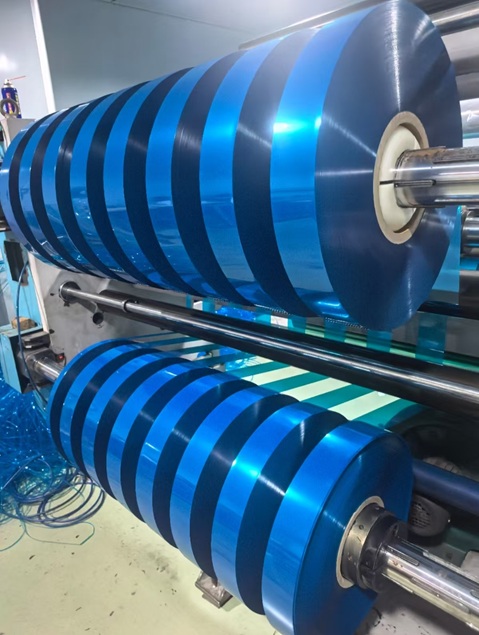
Blue PET film: how color is added and how to keep the shade consistent
Blue PET film is polyester film that has been colored blue, either through the film itself or through a coating. “Blue” is not one color, though. It can mean a light tint, a deep navy or a see-through shade, and the same word on two quotes can describe different products. This guide explains in general terms how blue PET film gets its color and what to check so the shade stays the same from one order to the next. It is general industry information, not a recommendation for any specific grade.
What is blue PET film?
Generally, blue PET film gets its color from a dye or pigment added to the polymer, or from a colored coating on one or both surfaces. These are different constructions. In a film colored throughout, the shade runs through the whole thickness. In a coated film, the color sits on the surface and the base film underneath may be clear. Ask which one is being quoted, because it affects appearance, surface feel and how the film behaves in printing, laminating or die cutting.
Transparent blue or opaque blue
- Transparent blue: light passes through and the film looks tinted. The shade depends on thickness, so a thicker film looks deeper. See our guide to clear PET film for the optical values worth checking.
- Opaque blue: the film blocks most light and looks solid. Opacity depends on the pigment level and the thickness, much as with the dark films covered in our guide to black polyester film.
Tell the supplier which one you need, and whether the film will be viewed through light, against a background or on its own.
Why the shade can change between orders
- Different batches: small changes in the amount of dye or pigment can shift the shade slightly.
- Different thickness: the same recipe looks lighter in thin film and deeper in thick film.
- Different surface: gloss and matte surfaces reflect light differently, so the same blue can look different.
- Different lighting: daylight, shop light and LED light can make one sample look like another color.
How to keep the shade consistent
Agree on a reference before you order. A physical sample or a color standard works better than a name like “sky blue” or “royal blue”, and the supplier can only match a shade it can see. Ask whether the color is measured, and what difference between batches is acceptable. Keep a retained sample from the first approved order and compare each new delivery against it under the same light. For decorative uses, our guide to decoration PET film covers other finishes that need this kind of care.
What to check on a datasheet before ordering
- Appearance: transparent or opaque, and a measured light transmission value if it matters, at the thickness you plan to buy.
- Surface: matte or gloss, treated or untreated, one side or both.
- Thickness and tolerance: the nominal thickness and the allowed variation.
- Color stability: if the film will see heat or sunlight, ask what data exists. Do not assume a colored film keeps its shade in every condition.
- Mechanical and thermal data: tensile strength, shrinkage and working temperature, if the film will be converted or heated.
- Roll format: width, length and core size. Our roll cores are 76 mm inner diameter.
Compare samples under your own light
Color is easy to misjudge on a screen or a datasheet. Put the samples next to your reference under the lighting your product will really be seen in, and check them again after your own process step.
Talk to Us
Jinlu Film supplies PET film in various grades, and also supplies products with similar specifications, including domestic alternatives. We slit and convert PET film in our own facility, with custom roll widths, lengths and 76 mm cores, and we provide datasheets and samples. If you need a blue film, send us your reference sample, thickness, surface and format needs and our team will help you narrow the options. Learn more about us as a PET film manufacturer.
More PET Film Guides
White Polyester Film: four checks that affect whiteness.
UV Resistant PET Film: why plain PET needs help outdoors.
Food Grade PET Film Wholesale: what the label really covers.
Polyester Film for Membrane Switches: what to specify.
PET Film for Printed Electronics: why the surface comes first.
General guidance for reference only. Trademarks belong to their respective owners.