White polyester film: what makes it white, and four checks before you order
White polyester film is PET film that has been made white and opaque, so it can serve as a bright background, a reflective layer or a printable base. “White” on a quote does not say how white, how opaque or what the surface is like. This guide explains in general terms how white PET film gets its color and which four checks help you compare offers. It is general industry information, not a recommendation for any specific grade.
What is white polyester film?
Generally, white polyester film gets its color from a white pigment or filler added to the film, or from tiny voids formed inside it that scatter light. In both cases the film scatters most of the light that hits it, which is why it looks white and blocks much of the light passing through. A white coating on a clear base is a different construction, and it can behave differently in thickness, surface feel and processing. Always ask which construction is being quoted. For an example of how a white grade is described, see our page on Toray Lumirror E20 white PET film.
Four checks that change how white the film looks
- 1. Whiteness or brightness: two white films can look different side by side, one slightly warm and one slightly blue. Ask whether a measured whiteness value is available and how it was measured.
- 2. Opacity: whiteness and opacity are not the same. A film can look white and still let some light through. If you need to hide what is behind the film, ask for a measured light transmission or opacity value at the thickness you plan to buy.
- 3. Surface: matte and gloss white films look and print differently. A glossy surface shows more reflection and fingerprints, while a matte surface looks softer. If printing, coating or laminating follows, tell the supplier which process it is.
- 4. Thickness and tolerance: thickness affects opacity as well as stiffness and handling. Our overview of PET film thickness and where each is used shows the general range. Ask for the tolerance, not just the nominal value.
White, black and clear: how to decide
The color usually follows the job. White suits a bright, printable or reflective background. Black suits light blocking or a dark look, as covered in our guide to black polyester film. Clear film suits cases where you need to see through the film. If you are unsure, decide first whether the film should reflect light, absorb it or let it through.
Printing on white PET film
White film is a common base for printed labels, cards and panels, because inks look brighter on a white background. The surface decides how well inks hold, so ask whether the film is treated or coated for printing. Our overview of PET film printing covers the basics.
What to check on a datasheet before ordering
- Whiteness and opacity values: measured values, and the thickness they apply to.
- Surface: matte or gloss, treated or untreated, one side or both.
- Thickness and tolerance: the nominal thickness and the allowed variation.
- Mechanical and thermal data: tensile strength, shrinkage and working temperature, if the film will be converted or heated.
- Color stability: if the film will see heat or sunlight, ask what data exists. Do not assume white film stays white in every condition.
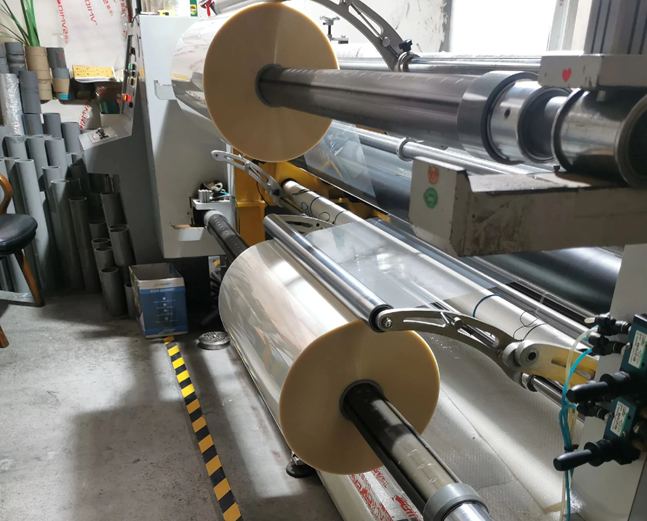
- Roll format: width, length and core size. Our roll cores are 76 mm inner diameter.
Compare samples side by side
Small differences in whiteness are easy to miss on a datasheet and easy to see in a sample. Put samples next to each other under the lighting your product will really be seen in, and check them again after your own process step.
Talk to Us
Jinlu Film supplies PET film in various grades, and also supplies products with similar specifications, including domestic alternatives. We slit and convert PET film in our own facility, with custom roll widths, lengths and 76 mm cores, and we provide datasheets and samples. If you are choosing a white film, send us your thickness, surface and process needs and our team will help you narrow the options. Learn more about us as a PET film manufacturer.
More PET Film Guides
UV Resistant PET Film: why plain PET needs help outdoors.
Food Grade PET Film Wholesale: what the label really covers.
Polyester Film for Membrane Switches: what to specify.
PET Film for Printed Electronics: why the surface comes first.
Decoration PET Film: finishes and what to specify.
General guidance for reference only. Trademarks belong to their respective owners.