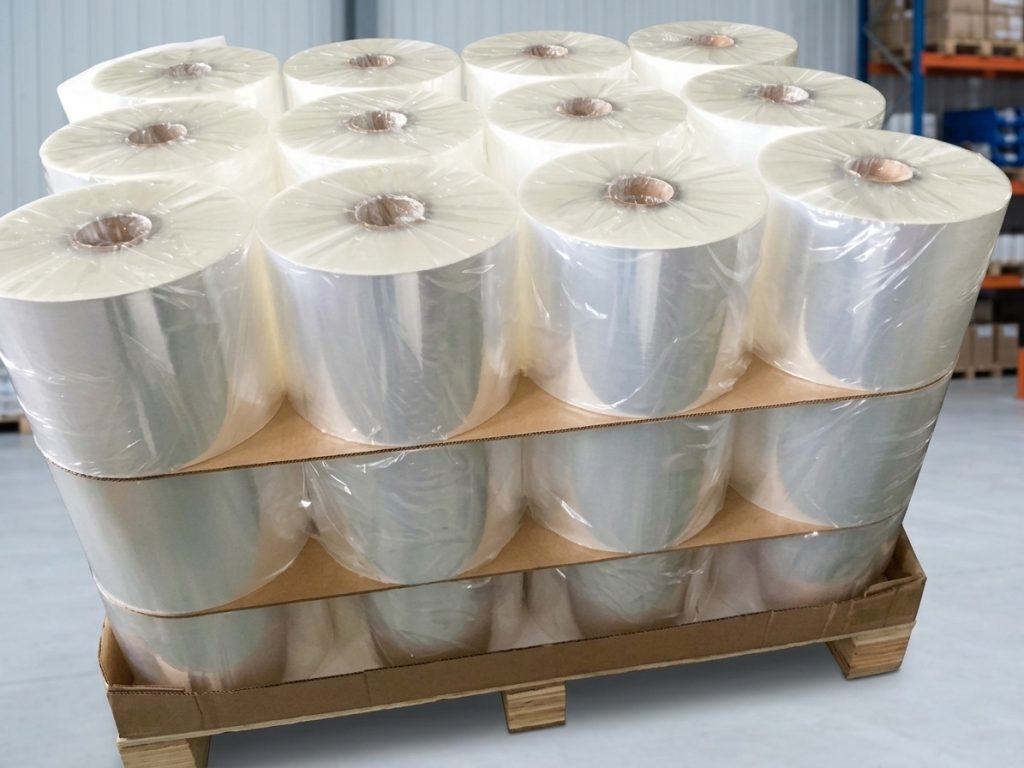
6um PET film is an ultra-thin polyester film used in applications where a thin dielectric layer, dimensional stability, and controlled film handling are important. It sits between specialized ultra-thin grades and more common industrial PET film thicknesses. Typical applications include capacitor film, selected flexible printed circuit (FPC) processes, and precision insulation applications.
At only 6 microns, the film requires careful control during production, winding, slitting, and converting. Small variations in thickness, surface quality, or tension can have a noticeable effect on processing performance. Buyers should therefore evaluate the actual technical requirements rather than selecting material based on nominal thickness alone.
Where Is 6um PET Film Used?
The suitability of 6um PET film depends on the material grade and the processing conditions. Common application areas include:
- Capacitor film: Used as a thin dielectric substrate in selected polyester film capacitor applications. Electrical properties, thickness uniformity, and surface quality are important considerations.
- Flexible printed circuits: Certain thin-film constructions may use ultra-thin PET as an insulating or supporting layer. Compatibility with the circuit structure and subsequent processing must be confirmed.
- Electrical insulation: Used in selected precision insulation constructions where a thin polyester layer is required.
- Specialty adhesive tape: May be considered as a thin backing or carrier in applications where film thickness and flexibility are important.
These applications do not all use the same PET grade. For example, capacitor applications may require a film specifically designed for metallization and dielectric performance. A general-purpose 6um PET film should not automatically be treated as a suitable capacitor grade.
For a specific 6um capacitor-grade example, see Toray Lumirror C21 PET film for capacitors, which is listed as a 6-micron polyester film.
Why Is 6 Micron PET Film More Difficult to Process?
Compared with thicker PET film, a 6um film has less physical body and requires more careful handling. The production and converting process can be sensitive to several factors:
- Thickness uniformity: Small thickness variations can affect the consistency of the finished material.
- Web tension: Excessive or unstable tension may cause stretching, wrinkles, or web breaks.
- Winding quality: Roll hardness, alignment, and winding tension need to be controlled carefully.
- Edge quality: Slitting conditions can influence edge appearance and the risk of damage during handling.
- Surface condition: Surface defects, contamination, or unsuitable roughness may affect coating, metallization, or other downstream processes.
A film that performs well in a small laboratory test may behave differently on a high-speed production line. Buyers should evaluate samples using the actual equipment and processing conditions whenever possible.
6um PET Film Compared with Standard PET Film
Six-micron PET film is considerably thinner than many commonly used industrial polyester film grades. The difference is not simply a matter of weight: thickness can influence handling, stiffness, electrical properties, and the suitability of the film for a particular process.
| Thickness | General Characteristics | Typical Considerations |
|---|---|---|
| 6um | Ultra-thin PET film | Precision handling, thickness uniformity, and application-specific properties |
| 12um | Thin industrial PET film | Electrical insulation, flexible converting, and selected packaging applications |
| 25um | Common thin-gauge PET film | General converting, printing, insulation, and lamination |
| 50um and above | Thicker PET film grades | Greater film body and support for selected industrial applications |
These are general thickness comparisons, not interchangeable specifications. A 12um or 25um film cannot automatically replace a 6um grade when the application requires a specific dielectric or processing performance.
For comparison with a more conventional industrial polyester film range, see Toray Lumirror S10 PET film, which covers standard thickness grades beginning at 12um.
What Specifications Should Buyers Check?
When sourcing 6um PET film, buyers should request clear technical information. The nominal thickness alone is not enough to determine whether a film is suitable.
- Nominal thickness and tolerance: Confirm the specified thickness and the actual acceptable tolerance range.
- Tensile strength: Check machine direction (MD) and transverse direction (TD) values where relevant.
- Elongation: Understand how much the film can stretch before breaking under the specified test conditions.
- Thermal shrinkage: Check dimensional changes under the temperature and exposure time relevant to the application.
- Surface characteristics: Confirm roughness, treatment, and cleanliness requirements.
- Electrical properties: For capacitor and insulation applications, request the relevant dielectric and electrical test data.
- Roll specifications: Confirm width, roll length, core diameter, winding direction, and packaging requirements.
- Processing conditions: Explain whether the film will be metallized, coated, laminated, printed, or slit at high speed.
Thickness selection should always be related to the end use. Our PET film thickness guide explains why a thicker grade is not automatically better for every application.
6um PET Film for Capacitor Applications
Capacitor applications require particular attention to dielectric performance and film consistency. The PET film acts as an insulating layer, so thickness uniformity, surface condition, and electrical properties can influence the performance of the finished capacitor.
Some capacitor-grade polyester films are also designed to support metallization. The film must be compatible with the metallizing process and the required winding conditions. Buyers should check the grade-specific technical data rather than assuming that every 6um PET film has the same electrical or metallizing performance.
For broader information about electrical insulation materials, see our PET insulation film product information. For ultra-thin capacitor applications, the specific grade and its technical data remain essential.
How to Select a Suitable Supplier
When evaluating suppliers of ultra-thin PET film, buyers should look beyond the quoted price. A supplier should be able to provide clear specifications and explain the material’s intended application.
Useful questions include:
- Can the supplier provide a technical data sheet for the exact 6um grade?
- What thickness tolerance can be specified and verified?
- Are MD and TD mechanical properties available?
- Is the film designed for capacitor, insulation, or general converting applications?
- Can the supplier provide samples for testing on the buyer’s production line?
- Can the required width, roll length, and winding specifications be supplied?
Buyers can also review the Jinlu PET film product range to compare available thicknesses and related polyester film materials. The exact grade should be confirmed according to the intended application and technical requirements.
PET Film and Polyester Film: Are They Different?
PET stands for polyethylene terephthalate, which belongs to the polyester family. In common industrial film terminology, PET film and polyester film usually refer to the same base material. However, different grades may have different mechanical, thermal, electrical, and surface properties.
When comparing supplier quotations or technical documents, buyers should check the exact grade and specifications rather than relying only on the material name. Read our explanation of PET film versus polyester film for more details.
Frequently Asked Questions
What is 6um PET film commonly used for?
It is used in selected ultra-thin applications, including capacitor film, certain flexible circuit constructions, and precision insulation. The correct grade depends on the required electrical, mechanical, and processing properties.
Is all 6um PET film suitable for capacitors?
No. Capacitor applications may require specific dielectric properties, thickness uniformity, surface characteristics, and metallizing compatibility. Buyers should confirm that the particular grade is designed for the intended capacitor process.
Why is thickness tolerance important for 6um PET film?
At this low thickness, even small variations can affect the consistency of the film and its behavior during processing. Buyers should request the actual tolerance specification rather than relying only on the nominal 6um value.
Can 6um PET film be used for flexible printed circuits?
Selected thin PET grades may be used in certain flexible circuit constructions, but suitability depends on the circuit design, thermal conditions, dimensional requirements, and downstream processing. The material should be validated for the specific application.
Can 12um PET film replace 6um PET film?
Not necessarily. A thicker film may provide different handling and mechanical characteristics, but it changes the material thickness and potentially the electrical or functional design. Any substitution should be evaluated against the original technical requirements.
What information should I provide when requesting a quotation?
Please provide the required thickness, thickness tolerance, width, roll length, quantity, intended application, and any special electrical, thermal, or surface requirements. If available, include the technical data sheet or reference grade.
About Jinlu
Dongguan Jinlu Electronics Co., Ltd. supplies PET film and related flexible film materials for industrial applications. We work with material producers and arrange suitable specifications, slitting, rewinding, and sheet cutting according to project requirements.
For 6um PET film inquiries, please provide your application, required specifications, quantity, and any reference material information. This helps us evaluate whether a suitable grade can be sourced for your project.
Contact Jinlu for PET film inquiries
Disclaimer
The information in this article is provided for general reference only. Actual properties and processing performance may vary depending on the PET grade, production conditions, thickness tolerance, and end-use requirements. Application suitability should be confirmed through the original manufacturer’s technical documentation and appropriate production testing.