Comparing Dimensional Stability, Barrier Properties, and Cost for Modern Packaging
Product Overview
Choosing the right flexible packaging material can make or break your product’s shelf life and presentation. With so many options available, buyers often find themselves comparing BOPET vs BOPP vs PE. Each of these films has distinct advantages, but they behave very differently in terms of moisture barrier, temperature resistance, and mechanical strength. In this guide, we break down the key differences and explain why BOPET is often the superior choice when dimensional stability and high-barrier protection are critical.
BOPET (Biaxially Oriented Polyethylene Terephthalate)
BOPET is the powerhouse of the three. It offers exceptional tensile strength, high temperature resistance (up to 150°C), and outstanding dimensional stability. When it comes to barrier properties, BOPET provides excellent protection against oxygen and aromas. It is widely used as the outer layer in laminated packaging or for high-end electronics and industrial insulation.
BOPP (Biaxially Oriented Polypropylene)
BOPP is known for its low cost, excellent moisture barrier, and high clarity. It is highly versatile and commonly used for snack foods and labels. However, BOPP has a lower melting point and will shrink or deform at high temperatures, which limits its use in heat-intensive processes compared to BOPET.
PE (Polyethylene)
PE is a soft, flexible film known for its excellent heat-sealing properties and puncture resistance. It is typically used as the inner sealing layer in packaging. While PE provides a good moisture barrier, it has relatively poor dimensional stability and lower tensile strength compared to BOPET.
The Verdict: Which Should You Choose?
If you need a material that will not stretch or deform under heat and tension, BOPET wins on dimensional stability. If your primary concern is preventing oxygen from spoiling food or degrading electronics, BOPET’s barrier properties are superior. For applications requiring high heat resistance and structural integrity, BOPET is the clear industry standard.
Technical Characteristics of BOPET
The following values represent the typical capabilities of our BOPET film:
- Material: Biaxially Oriented Polyethylene Terephthalate
- Thickness Range: 12 μm up to 500 μm
- Tensile Strength: MD 133 to 271 MPa
- Thermal Shrinkage at 150°C, 30min: MD 0.9% to 1.5%
- Barrier Properties: Excellent against oxygen and moisture
- Certifications: RoHS, REACH, UL746B (RTI 105°C)
Why Choose Jinlu Film as Your Supplier
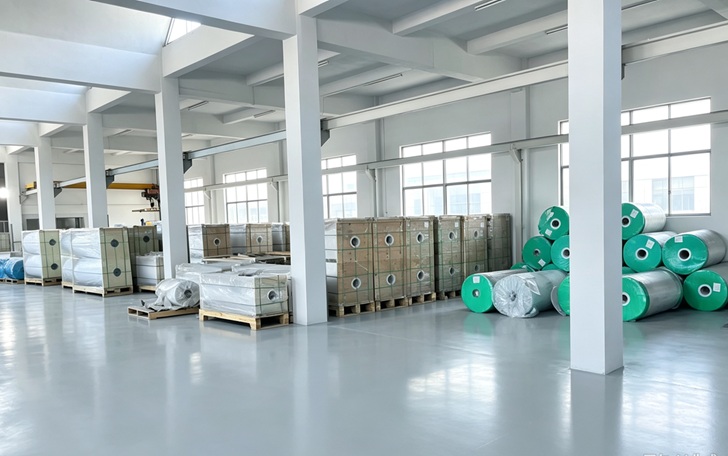
Jinlu Film is a leading BOPET Film Manufacturer and Factory. We provide high-quality, high-barrier BOPET film that outperforms standard packaging materials in demanding environments. Whether you are designing a new flexible package or need custom slitting for industrial use, we offer factory-direct pricing and strict quality control.
Contact us today for a factory quote, technical data, or a sample of BOPET Film.