The BOPET Film Ultimate Guide: From the Invention of Mylar to Modern Biaxial Stretching
Product Overview
Look around your desk, your car, or your kitchen, and you will likely find BOPET film. It is the invisible workhorse of modern manufacturing. But how did a simple plastic sheet become so essential? To answer this, we need to look at the history, the science, and the production process. This BOPET Film Ultimate Guide will walk you through its origins, its connection to Mylar, and why it remains the cornerstone of industries ranging from electronics to food packaging.
From Mylar to Modern BOPET
The story begins in the 1950s when DuPont scientists developed a revolutionary new polyester film and branded it “Mylar.” It was incredibly strong, transparent, and stable. Because of its superior performance, “Mylar” quickly became the generic term for any high-performance polyester film. However, the core material is simply Biaxially Oriented Polyethylene Terephthalate (BOPET). Today, manufacturers worldwide produce BOPET film, offering the exact same performance as the original brand at a much more accessible scale.
The Magic of Biaxial Stretching
What makes BOPET so special is not just the raw PET resin, but the manufacturing process. The resin is extruded into a thick sheet and then stretched simultaneously in two directions (Machine Direction and Transverse Direction) at high temperatures. This “Biaxial Stretching” forces the polymer molecules to align, creating a film that is remarkably strong, optically clear, and resistant to heat. Without this process, you would just have standard PET; with it, you have a high-performance engineering material.
Why is BOPET the Cornerstone?
BOPET film is versatile. In electronics, it provides electrical insulation for motors and flexible circuits. In packaging, it offers a strong barrier against moisture and oxygen. In optical applications, it acts as a protective layer for displays. Its ability to be customized (from 12 μm to 500 μm, and with various coatings) makes it the foundation for thousands of end products.
Technical Characteristics
The following values represent the typical capabilities of our BOPET film:
- Material: PET (Polyethylene Terephthalate) / BOPET
- Thickness Range: 12 μm up to 500 μm
- Tensile Strength: MD 133 to 271 MPa
- Thermal Shrinkage at 150°C, 30min: MD 0.9% to 1.5%
- Breakdown Voltage (Insulation Grades): up to 39.6 kV
- Certifications: RoHS, REACH, UL746B (RTI 105°C)
Why Choose Jinlu Film as Your Supplier
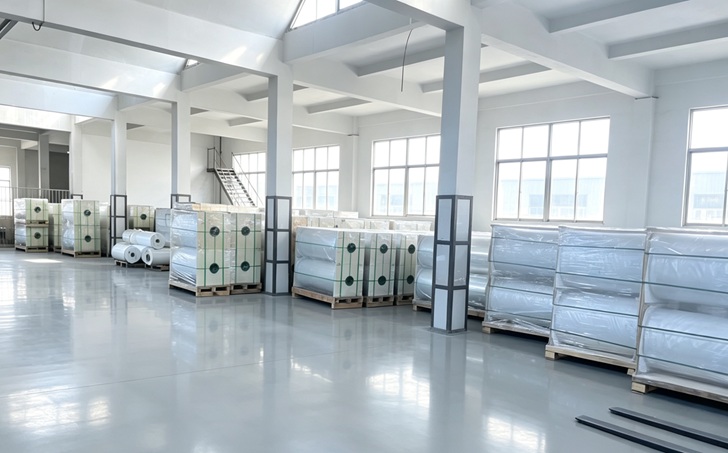
Jinlu Film is a leading BOPET Film Manufacturer and Factory that has mastered the biaxial stretching process. We provide high-quality BOPET film that meets the rigorous demands of modern industry. Whether you need a Mylar Alternative or custom specifications, our factory-direct pricing and strict quality control ensure you get the best material.
Contact us today for a factory quote, technical data, or a sample of BOPET Film.