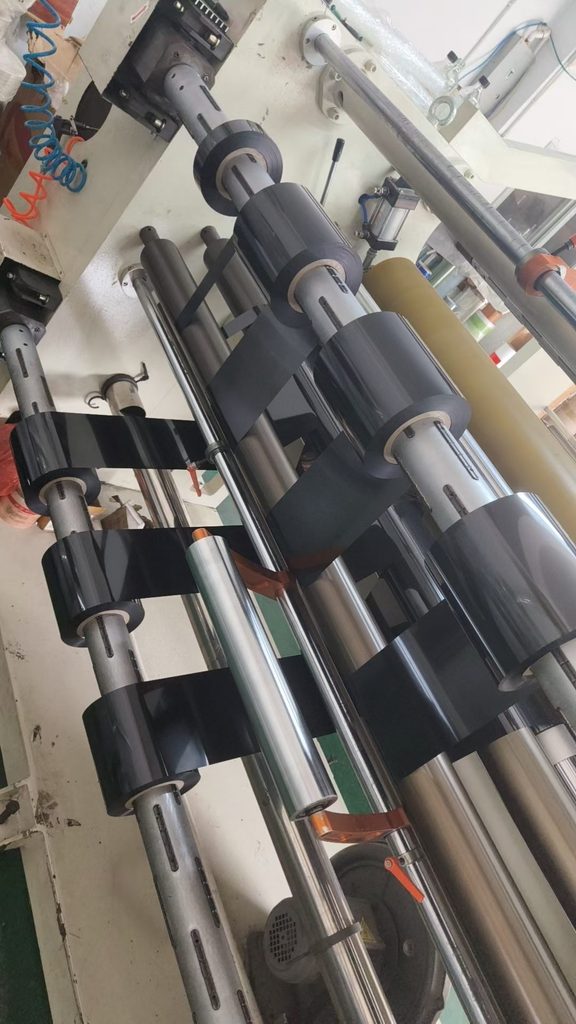
PET film material is polyethylene terephthalate stretched into a thin, strong sheet, and a few of its properties explain why it turns up in so many products
Most people meet PET film without knowing it: in labels, tapes, packaging, and insulation. The name sounds technical, but the idea is simple.
What It Is Made Of
PET stands for polyethylene terephthalate, a polyester. Safety data sheets for polyester film list it as the only component, with a content above 99 percent and a CAS number of 25038-59-9, and a melting point in the range of roughly 256 to 265°C. You can see the details in the SKC Skyrol safety data sheet guide and the Toray Lumirror safety data sheet guide.
How It Becomes a Film
The polymer is melted, formed into a sheet, and then stretched in two directions, which is why many films are called biaxially oriented. The stretching is what gives PET film its strength and stability for its thickness (a general explanation).
Why It Is Used So Widely
- Strength for its thickness: a thin sheet can still carry tension.
- Dimensional stability: it moves little under heat compared with many plastics, although grades differ.
- Electrical insulation: datasheets for insulation grades list breakdown voltage and high resistivity.
- Clarity or color on demand: it can be made clear, white, black, or matte.
- Printability and coatability: especially when the surface is treated.
One Material, Many Grades
The base chemistry is the same, but the grades differ in clarity, color, surface, thickness, and heat behavior. The Toray Lumirror PET film grades map shows how one standard film branches into clear, matte, white, black, thin, and heat-resistant variations. For five of the most common, see Popular Toray Lumirror PET Film Models.
What PET Is Not Good At
Like any material, PET has limits. Hydrolysis resistance, for example, is a special property listed only for certain grades, and food contact status differs from grade to grade. Always check the datasheet for the grade you plan to buy.
Quick Answers
Is PET film the same as polyester film?
Yes. PET is the most common polyester used for film.
Is every PET film food safe?
No. Check the grade’s datasheet and local rules.
Can Jinlu Film supply PET film?
Jinlu Film supplies PET film grades, including comparable-specification alternatives and domestic options, with datasheets and samples. Tell us your application and we will suggest what to test.
More PET Film Guides
- PET Film Screen Protector: what the film layer does
- PET Film Tape: What the Backing Film Does: strength, color, and adhesion
- PET Film Packaging: Four Questions That Decide the Right Film: choosing a packaging grade
- Looking for a PET Film Manufacturer in Malaysia?: an import checklist
- Ordering PET Film Rolls? Know These Five Terms First: width, length, core, and winding
Talk to Us
Jinlu Film can match a grade to your application. Tell us your use, thickness, and finish, and contact us for technical data, samples, or a factory quote.
This article is general guidance for reference only. Please confirm the details of any grade with your supplier and the official datasheet.