Decoding Curing Temperatures, Coating Uniformity, and Quality Control to Eliminate Adhesive Contamination
Product Overview
In the pressure-sensitive adhesive (PSA) and electronics industries, a release film is expected to do its job silently and leave no trace behind. However, a common and catastrophic issue plagues manufacturers: Silicone Oil Transfer (often called Silicone Fall-Off). When the silicone layer migrates from the release liner to the adhesive, it degrades the tackiness of the tape, ruins bonding strength, and can cause severe contamination in sensitive applications. Understanding the root causes of Silicone Oil Transfer in Release Films is the first step to eliminating this invisible flaw.
The Root Causes of Silicone Transfer
Why does silicone fall off? The issue almost always stems from the manufacturing process:
- Insufficient Curing: Silicone requires precise thermal energy to crosslink and anchor to the PET substrate. If the oven temperatures are too low or line speeds are too fast, the silicone remains uncured and easily rubs off onto the adhesive.
- Uneven Coating Weight: If the silicone is applied too thickly in some areas, the excess cannot cure properly, leading to transfer.
- Poor Substrate Anchoring: Without proper surface treatment (like corona treatment) or a primer layer, the silicone cannot grip the PET base film tightly enough.
How Jinlu Film Prevents Silicone Fall-Off
As a direct manufacturer, we control every variable in the coating process to ensure a stable, non-transferring release liner:
- Precise Thermal Curing: We maintain strict temperature profiles across multi-zone ovens to guarantee 100% curing of the silicone layer.
- Micro-Precision Coating: Our advanced coating heads ensure a highly uniform silicone weight across the entire width and length of the roll.
- Rigorous Quality Testing: We perform standard residual adhesion tests on every batch. If the residual adhesion rate drops below our strict threshold, the batch is rejected.
Key Metrics for Evaluation
When evaluating a release film, buyers should always look at the Residual Adhesion Ratio. This metric measures how much tackiness the adhesive retains after being in contact with the liner. A high-quality film should maintain a residual adhesion of 90% to 95% or higher.
Technical Characteristics
The following values represent the typical capabilities of our high-quality release film range:
- Material: Silicone-Coated PET (Polyethylene Terephthalate)
- Coating Type: Solvent-based or solvent-free (100% solids)
- Residual Adhesion Ratio: 90% to 95% (Tested to prevent silicone transfer)
- Thickness Range: 12 um to 100 um
- Compliance: RoHS, REACH compliant
Manufacturing and Supply
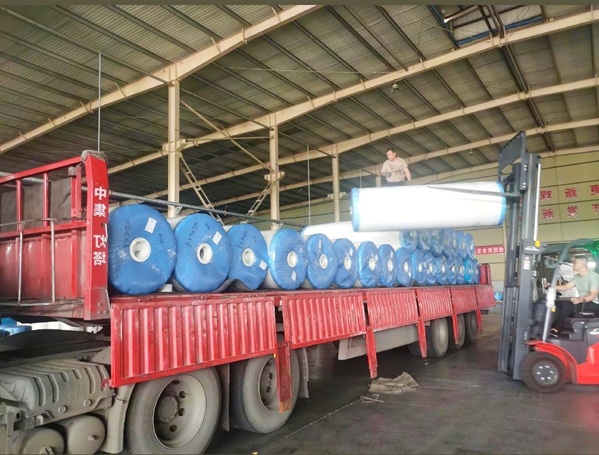
Jinlu Film is a direct manufacturer of high-performance functional films. We utilize advanced curing technology and strict inline quality control to guarantee a zero-transfer release film. We support custom slitting widths and bulk order fulfillment to ensure your adhesive production lines run flawlessly.
Contact us today for a factory quote, technical data, or a sample of Release Film.